How to Store Paint by Numbers Kits (So the Paint Doesn't Die)
By Simon I., co-founder, Paint Kit Studio. Published June 10, 2026. Last updated June 10, 2026.
Key takeaways
- The part of a stored kit that actually dies is the paint, not the canvas. Acrylic skins over and dries out the moment air gets at it, so sealing the pots is the whole job.
- Press every lid down until it clicks, and store the pots upright somewhere cool and out of the sun. A shoebox or a zip bag does the trick.
- A pot that has gone tacky is often saveable. A drop of water, a good stir, a few minutes. A pot that has gone hard all the way through is gone.
- Store a part-finished canvas flat or loosely rolled with the painted side out, never folded, and keep the brushes washed and dry so the bristles do not set.
- A finished painting wants the same things any artwork wants: out of direct sun, off damp walls, and ideally sealed with a varnish once it is fully cured.
Bottom line: people fuss over protecting the canvas and forget the pots, which is backwards. Seal the paint properly and a half-done kit will wait months for you. Leave a lid loose and you will be hunting for a replacement pot before you have painted a thing.
Storing a paint by numbers kit sounds like the most boring topic on earth until the evening you dig the box back out, full of good intentions, and find half your pots have turned to little pucks of rubber. It happens a lot. I know it happens a lot because we post out replacement pots roughly forty times a year, and almost every single one is the same story: the kit got shelved for a few months with a lid not quite pressed down.
So when people ask me how to store a kit, they usually mean the canvas. How to keep it flat, whether to roll it, that sort of thing. And the canvas barely matters. It is sturdy. It will sit in a cupboard for a year and be perfectly fine. The thing quietly dying in that box is the paint, because acrylic starts drying the second air reaches it, and a loose lid is all the air it needs. Get the pots right and everything else is easy. So that is where this guide starts, and the canvas advice comes after, in its proper place near the back where it belongs.
What actually ruins a kit in storage
Acrylic paint is water-based. That is the whole reason it is so friendly to paint with, brushes rinse clean under the tap, a finished patch is dry inside the hour (Tate has a good plain explainer on the medium). But water-based cuts both ways. The same water that keeps the paint workable evaporates the instant it is exposed, and as it leaves, the acrylic polymer particles draw together and coalesce into a solid film that no longer redissolves (here is how that film-forming works). In an open or badly-sealed pot, that can happen in days. In a properly sealed one, the paint stays wet for months, sometimes the better part of a year.
So the enemy is not time on the shelf. It is air on the paint. Everything below is really just different ways of keeping air off it.
Storing a kit you are partway through
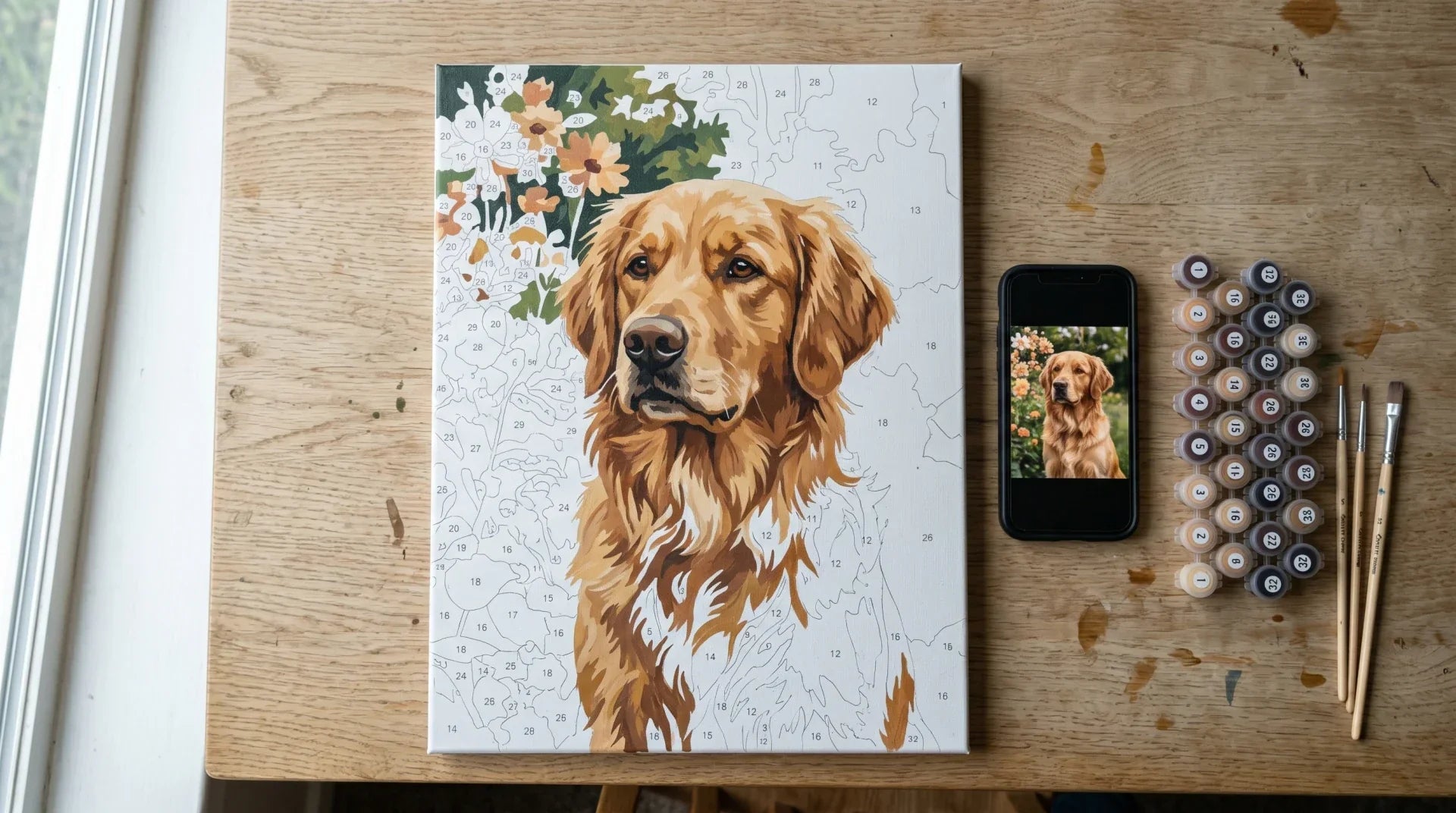
This is the common one. You have done a few evenings, the sky is in, the dog is half done, and life gets busy. Here is how to park it so it is waiting for you, not ruined.
Deal with the pots first, because they are the fragile bit. Press every lid down until you feel it click, all the way round, not just popped on top. If a pot came without a great lid, or you have already lost one, a square of cling film pushed down onto the paint surface and then the lid over the top works surprisingly well, it is the air at the surface you are fighting. Store them upright in a box so nothing tips and weeps. A shoebox, a takeaway tub, a zip-lock bag, none of it is fancy and all of it works. Somewhere cool and dark. Not a sunny windowsill, not next to a radiator, not the garage in July.
Then the brushes. Wash them properly the night you stop, while the paint is still soft, because acrylic that dries in the bristles is basically permanent and it splays the brush into a useless little fan. Reshape the damp bristles with your fingers, lay the brushes flat to dry, and once dry, stand them up or keep them flat. Never store a brush resting on its bristles.
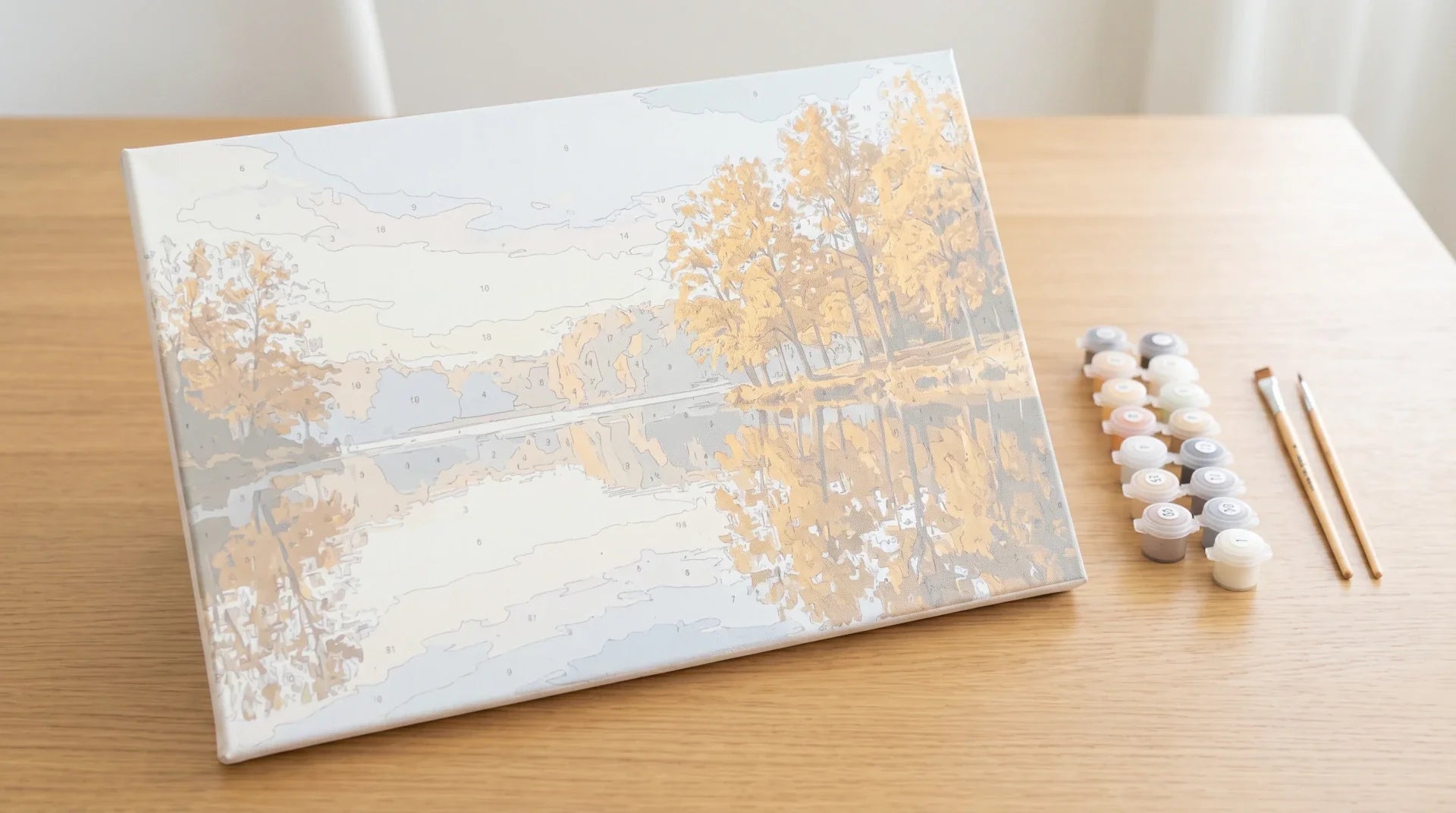
The canvas itself you can leave flat on a shelf, or slide it into the box, painted side up so nothing presses into the wet sections. If a region is still tacky, give it a day in the open air to cure before you bury it. That is genuinely the whole routine. Five minutes, and the kit keeps.
Keeping opened paint pots alive

Say you opened all the pots on day one, the way a lot of people do, peeking at every colour. Now they all need to survive the gaps between sessions. A few things help.
The big one is just the lid, pressed down hard every time, every pot, every session. It feels fussy. Do it anyway. The thirty seconds you spend clicking lids is the single highest-value habit in the whole hobby, going by our replacement-pot postbag.
If a pot has already started to skin over but is still soft underneath, you can usually rescue it. Add a drop or two of water, stir it back together with a toothpick or the end of a brush, give it a few minutes to loosen, and it comes back to a paintable consistency more often than not. Do not drown it, a drop at a time, because too much water thins the colour and weakens how it covers. If a pot has gone hard the whole way through, a solid little disc, that one is finished and no amount of water brings it back. That is a replacement-pot situation, and most kit makers, us included, will send you one.
One myth worth killing: the fridge does not help. People assume cold keeps paint fresh like it keeps milk fresh. It does not do much for a sealed acrylic pot, and a fridge cycles humidity in ways that can do more harm than good. Cool and dark and sealed is all you are after. A cupboard is perfect.
Storing a canvas you have not started yet
Maybe you bought a kit, or three, to have in the drawer for a rainy week. Rolled canvases need a tiny bit of care so they are ready when you are.
If it came rolled in a tube, leave it in the tube until you are ready to paint, that is the safest place for it. If it came flat, keep it flat, ideally with a sheet of paper over the printed face so nothing scuffs the outlines. If you ever do need to roll a canvas yourself, roll it loosely with the printed side facing out, not in. Rolling print-side-in creases the image and can crack the outline printing along the folds. Print-side-out keeps everything stretched gently the right way. And never fold a canvas. A roll relaxes back flat. A crease is forever.
The pots in an unstarted kit are usually factory-sealed and will keep for ages, but they are not immortal, so do not buy fifteen kits and stash them for five years expecting all the paint to be perfect. Within a year or so you are completely fine.
Protecting a painting after it is finished
You did it, the thing is painted, the numbers have vanished under the colour. Now you want it to still look that good in ten years, and this is where the canvas finally earns its own section.
Let it cure first. Touch-dry inside an hour is true, but acrylic continues drying and firming up underneath as the paint film finishes forming. Give it two or three weeks before you varnish or wrap it. Then, if you want it to last, seal it with an acrylic varnish, matte or gloss to taste. Varnish is not just for shine, it puts a sacrificial layer between your painting and the dust, the fingerprints, and a chunk of the sun's damage.

Which brings up the real long-term enemy of any painting: light. Direct sunlight fades pigments over time, some colours far faster than others, and the cheaper or more vivid the pigment the more it tends to shift (the idea is called lightfastness, and there is a good overview of it here). So hang a finished piece on a wall that does not cop hours of hard afternoon sun, keep it off visibly damp walls, and that is most of the battle. If you are storing rather than hanging it, stand it upright, face protected with paper or bubble wrap, somewhere that does not swing between hot and cold. The same boring rules museums live by, just scaled down to a hallway.
The mistakes I see most often
- Lids popped on, not pressed down. The number one killer, by a mile.
- Leaving brushes to dry with paint still in them. They set into stiff little fans and never recover.
- Folding a canvas to make it fit a drawer. Roll it, loosely, print-side out, or do not move it at all.
- Storing the whole kit somewhere hot, a loft, a conservatory, a car. Heat dries pots faster and can warp a canvas.
- Hanging the finished painting in a blaze of direct sun and wondering why it looks tired a couple of summers later.
Get the lids and the light right and honestly, you have dodged ninety percent of the trouble. The rest is just tidiness. If you are still working on your first kit, our beginner's guide and the walkthrough on how to finish a kit cover the painting and the varnishing in more depth. And if you do dry out a pot beyond saving, that is exactly what our replacement service is for.
Frequently asked questions
How long can I leave a paint by numbers kit unfinished?
If the pots are sealed properly, comfortably several months, often closer to a year. The limiting factor is almost always the paint drying out, not the canvas, so the answer really depends on how well you click those lids down rather than on the calendar.
Can I save acrylic paint that has dried out?
If it is tacky or skinned on top but soft underneath, usually yes, with a drop of water and a stir. If it has set solid all the way through, no, that pot is done. Add water sparingly, a drop at a time, since too much weakens the colour and its coverage.
Should I store my paint pots in the fridge?
No need. A fridge does little for sealed acrylic and its humidity swings can do more harm than good. Cool, dark, dry and well-sealed, a normal cupboard, is all you want.
How do I store the canvas without ruining the picture?
Flat is best. If you must roll it, roll loosely with the printed side facing out, never in, and never fold it. A loose roll relaxes flat again, while a crease or a fold-line in the printing is permanent.
Do I need to varnish a finished paint by numbers painting?
You do not have to, but it helps it last. Let the paint cure for two to three weeks first, then an acrylic varnish, matte or gloss, adds a protective layer against dust, fingerprints and some light damage. Hanging it out of direct sun matters even more than the varnish.
Last updated June 10, 2026 by Simon I., Paint Kit Studio.